





A Financial Services Firm’s Guide to SEC Compliance from a Leading St. Louis Cybersecurity Firm
The SEC’s amendments to Regulation S-P have fundamentally changed cybersecurity and privacy requirements for financial services firms. With smaller entities facing a June 3, 2026 compliance deadline and the SEC Division of Examinations naming cybersecurity a key examination priority for 2026, financial advisors, wealth managers, and broker-dealers must act now.
The stakes are high: the SEC has levied over $2 billion in penalties for off-channel communications violations since December 2021, issued specific enforcement actions against firms for failing to implement multi-factor authentication, and made clear that robust cybersecurity programs are no longer optional.
This guide breaks down the critical requirements, explains what examiners will look for, and provides practical implementation guidance to help your firm achieve full compliance before the deadline.
Understanding the New Requirements
Who Must Comply
Regulation S-P applies to broker-dealers, investment advisers, investment companies, registered transfer agents, and any financial services firm handling non-public personal information about consumers.
Compliance Timeline:
- Larger entities: December 3, 2025 (deadline passed)
- Smaller entities: June 3, 2026
The Five Pillars of Compliance
The 25 requirements fall into five categories:
- Written Policies & Procedures (7 requirements)
- Technical Security Controls (7 requirements)
- Incident Response & Breach Notification (4 requirements)
- Employee Training & Awareness (3 requirements)
- Documentation & Audit Readiness (4 requirements)
Part 1: Written Policies & Procedures
SEC examiners need to see documented, board-approved policies. If it’s not written down, it doesn’t exist in an examination.
Critical Policies Required
Written Information Security Policy (WISP): Your WISP must address administrative, technical, and physical safeguards for customer information. This includes risk assessment methodology, clear assignment of security responsibilities, and regular testing procedures. Generic template policies won’t pass muster—examiners look for customization that reflects your actual environment and practices.
Incident Response Program: The amended Regulation S-P now explicitly requires a written incident response program with defined roles, escalation procedures, and notification protocols. Your program must include a clear definition of what constitutes a cybersecurity incident, named team members with specific roles, and step-by-step procedures for the new 30-day breach notification timeline.
Business Continuity Plan: FINRA Rule 4370 requires documented disaster recovery procedures. Examiners expect to see recovery time objectives (RTO), backup procedures with testing schedules, alternative operating procedures, and annual testing documentation. If you can’t prove your backups work through documented testing, you don’t have business continuity.
Vendor Management Policy: Since you remain responsible for third-party security practices, it’s critical to document your vendor oversight. This includes due diligence for new vendors, security requirements in contracts, ongoing monitoring procedures, and a risk-classified vendor inventory. High-risk vendors should provide SOC 2 reports or equivalent documentation.
Additional Required Policies
- Acceptable Use Policy covering approved communication channels, remote work security, and personal device restrictions
- Data Classification Policy defining how sensitive client information is categorized and handled
- Data Retention and Disposal Policy with documented destruction procedures
Part 2: Technical Security Controls
Technical controls are where compliance theory meets operational reality. The SEC has issued enforcement actions specifically for missing technical controls – these are not optional.
Multi-Factor Authentication (MFA)
The SEC has explicitly fined firms for failing to implement MFA. This is now a baseline expectation for all systems that store customer data, remote access, email systems, and administrative accounts. Common mistakes include allowing MFA bypass for certain users, using only SMS-based authentication (vulnerable to SIM swapping), and failing to enforce MFA on administrative accounts.
Implementation Priority:
- Email, VPN, and cloud applications (immediate)
- CRM, portfolio management systems, trading platforms
- All administrative and financial systems
Email Encryption
Regulation S-P requires safeguards for nonpublic personal information. Email encryption is a widely expected control. Implement automatic encryption for emails with keywords like SSN or account numbers, provide user-initiated encryption options, and consider secure client portals as alternatives to email for document sharing.
Endpoint Detection and Response (EDR)
Traditional antivirus is no longer sufficient. Modern cyberattacks evade signature-based detection. EDR provides behavioral analysis and real-time threat detection that examiners expect to see deployed on all endpoints with active monitoring and alerting.
Automated Patch Management
Unpatched systems are the #1 attack vector. Document your patching schedule with critical patches deployed within 30 days maximum. Examiners want to see automated patch deployment for workstations, controlled processes for servers, testing procedures, and documentation of all patching activities.
Additional Critical Controls
- Encrypted backups tested quarterly with documented recovery verification
- Network segmentation separating client data systems from general business operations
- Secure remote access via VPN or Zero Trust architecture with MFA required
Part 3: Incident Response & Breach Notification
The 30-Day Notification Requirement
The amended Regulation S-P’s 30-day breach notification requirement is a game-changer. You must notify affected individuals within 30 days of becoming aware that unauthorized access has occurred or is reasonably likely to have occurred.
What You Must Document
Breach Notification Procedures: Document your decision tree for determining if notification is required, pre-draft notification templates, establish processes for identifying affected individuals, and define notification methods. The 30-day clock starts the moment you become aware of unauthorized access or that it’s reasonably likely to have occurred.
Incident Response Team: Pre-designate team members, including an incident commander, IT/security lead, legal counsel, compliance officer, communications lead, and business lead. Document 24/7 contact information, escalation procedures, authority matrices, and communication protocols.
Legal Counsel Relationship: Establish your relationship with breach counsel before an incident occurs. This should include a retainer agreement, defined scope of services, fee structure, attorney-client privilege protocols, and 24/7 contact information. During a breach, you need immediate access to attorneys who understand SEC/FINRA obligations.
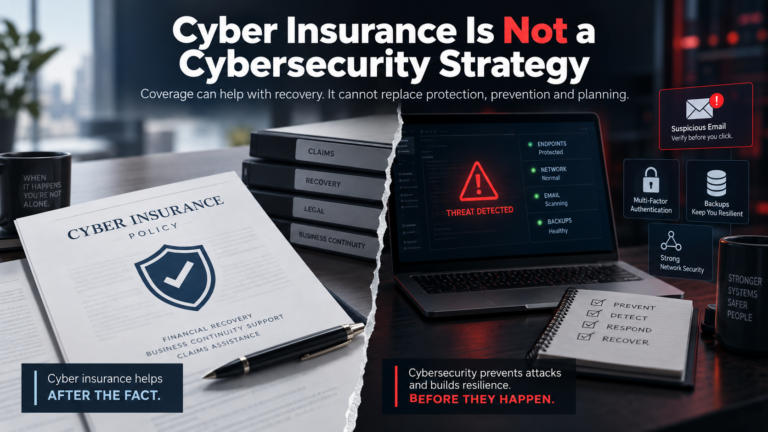
Cyber Insurance: Cyber insurance is now a baseline expectation. Examiners will ask to see your policy. Ensure coverage for regulatory fines (where legally permitted), breach notification costs, business interruption, forensic investigation, and legal defense. Recommended minimum coverage is $1-2 million for small firms, $3-5 million for mid-sized firms, and $10+ million for large firms.
Part 4: Employee Training & Awareness
Humans are simultaneously your greatest vulnerability and strongest defense. The SEC expects ongoing, documented training programs.
Annual Cybersecurity Awareness Training
SEC examiners routinely review training records. Document annual cybersecurity awareness training completion by all employees with training topics aligned with regulatory requirements, attendance records, training materials, and employee acknowledgments. Essential topics include phishing and social engineering, password security and MFA, secure handling of client information, incident reporting procedures, and off-channel communications prohibitions.
Phishing Simulation Testing
Phishing is the #1 attack vector for financial firms. Conduct quarterly phishing simulations with varied scenarios, track click rates and reporting rates, provide remedial training for repeat clickers, and document all testing and results. Measure improvement trends over time to demonstrate program effectiveness.
Off-Channel Communications Policy
The SEC has levied over $2 billion in penalties for off-channel communications since December 2021. This is a top enforcement priority. Explicitly prohibit unapproved platforms like WhatsApp, Signal, personal text messages, and personal email accounts unless properly monitored and archived. Document approved communication platforms, monitoring procedures, employee acknowledgments, and disciplinary procedures for violations.
Part 5: Documentation & Audit Readiness
The best cybersecurity program doesn’t matter if you can’t prove it to an examiner. Documentation is compliance currency.
Annual Policy Review
Policies that haven’t been reviewed in years suggest a compliance program on autopilot. Document annual review dates, track changes from previous versions, obtain board or management approval for updates, and maintain version control. Assess policies against regulatory changes, industry best practices, lessons learned from incidents, and technology or business changes.
Annual Risk Assessment
The SEC expects regular, documented risk assessments—not one-time exercises. Document your methodology, identify risks and vulnerabilities, rate risks by likelihood and impact, develop mitigation plans for high-risk items, track implementation of mitigations, and compare year-over-year results.
Penetration Testing or Vulnerability Assessment
Annual penetration testing demonstrates a proactive security posture. Engage qualified third parties or internal security teams, document all findings, create remediation plans for identified vulnerabilities, provide evidence of remediation completion, and compare results to prior years.
24-Hour Documentation Package
If you can’t produce documentation within 24 hours of an SEC request, it may as well not exist. Maintain a central repository of all compliance documentation with clear file naming, version control, and an index for quick navigation. Store documentation securely but accessibly (cloud storage recommended) with multiple people having access. Conduct annual mock examination drills to test your readiness.
What Examiners Will Request:
- All cybersecurity policies and procedures
- Evidence of annual policy reviews
- Training records with attendance and materials
- Incident reports and response documentation
- Vendor agreements and due diligence
- Risk assessment reports
- Penetration test or vulnerability assessment reports
- Cyber insurance policy
- Business continuity plan
- Testing and exercise documentation
Scoring Your Firm’s Readiness
Critical Risk (0-10 items completed)
Significant compliance gaps exist. Immediate action required before the June 2026 deadline. Conduct a gap assessment with a qualified consultant, develop a 90-day remediation plan, allocate budget for your compliance program, and engage legal counsel for regulatory guidance.
Moderate Risk (11-18 items completed)
Foundation in place, but notable gaps remain. Create a detailed remediation plan, assign ownership for each missing item, set monthly completion targets, begin documentation efforts immediately, and schedule annual training and testing.
Strong Position (19-25 items completed)
Well-prepared for the compliance deadline. Conduct a documentation audit, run a mock examination exercise, update any policies over 12 months old, ensure training records are complete, and schedule 2026 testing and assessments.
Your 90-Day Implementation Roadmap
Month 1: Foundation
- Week 1: Conduct gap assessment against all 25 requirements
- Week 2: Draft or update all required policies
- Week 3: Obtain management/board approval for policies
- Week 4: Complete annual risk assessment
Month 2: Technical Controls & Training
- Week 1: Implement MFA across all systems
- Week 2: Deploy EDR and configure monitoring
- Week 3: Conduct cybersecurity training for all staff
- Week 4: Perform phishing simulation baseline test
Month 3: Testing & Documentation
- Week 1: Conduct penetration test or vulnerability assessment
- Week 2: Organize compliance documentation package
- Week 3: Run tabletop incident response exercise
- Week 4: Final gap review and remediation
Common Compliance Pitfalls to Avoid
Template Policies Without Customization: Generic, vendor-provided policies that don’t reflect your actual practices will fail examination. Customize every policy to your firm’s specific environment, technology stack, and business model.
Policies That Don’t Match Reality: Don’t create fictional policies describing ideal-state procedures you don’t actually follow. Document what you actually do, then improve it.
No Evidence of Implementation: Great policies on paper mean nothing without proof of execution. Document everything—training completion, testing results, incident reviews, policy approvals.
Point-in-Time Compliance: Don’t scramble for compliance once, then let programs lapse. Build ongoing compliance into your annual calendar with scheduled reviews, training, testing, and assessments.
IT Managing Compliance Alone: Cybersecurity compliance requires collaboration across legal, compliance, business, and IT departments. This is not solely a technology problem.
What to Expect During an SEC Examination
The SEC provides 2-4 weeks advance notice with an initial document request list. The examination includes an opening meeting discussing your cybersecurity program, extensive document review, testing and sampling of controls, and a closing meeting discussing preliminary findings.
Common Questions Examiners Ask:
- Who is responsible for cybersecurity at your firm?
- When were policies last updated and how were employees notified?
- Show us your MFA implementation and backup recovery process
- Have you had any cybersecurity incidents and how were they documented?
- Show us training records and phishing test results
- Provide your vendor list with due diligence documentation
Be prepared to demonstrate, not just describe. Examiners will test whether you can actually restore from backups, verify MFA is enforced, and review sample incidents and training records.
Take Action Now
Alliance Tech offers a complimentary cybersecurity assessment and compliance gap report specifically for financial services firms in the St. Louis area. We’ll evaluate your current environment against all 25 requirements and deliver a written report with prioritized recommendations- yours to keep whether you work with us or not.
Schedule Your Free Assessment Now.
Alliance Tech has served St. Louis and Grand Rapids financial services firms for over 26 years, providing specialized IT services and cybersecurity solutions designed specifically for SEC-registered advisors, broker-dealers, and wealth management firms. Our Armada Managed IT Services include SEC compliance/FINRA compliance support, advanced cybersecurity, proactive IT management, incident response planning, and employee training programs.
This guide is provided for informational purposes and does not constitute legal or compliance advice. Consult with qualified legal counsel regarding your firm’s specific regulatory obligations.