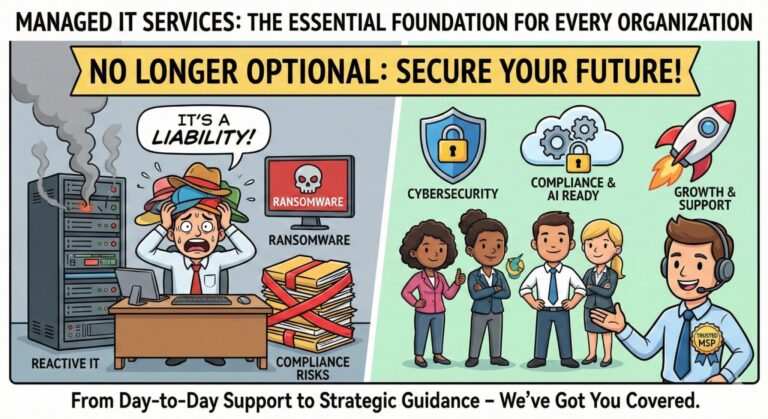

Wealth Management Firms Need an IT Company That Genuinely Understands Their Frustrations.
Most wealth managers didn’t start their firms to think about cybersecurity controls, software integrations, or whether their IT provider understands SEC expectations. Yet technology now touches every part of a modern advisory firm – from client communications and portfolio reporting to compliance documentation and data protection.
Despite heavy investment in tools, many wealth management firms feel constantly frustrated with their technology and uneasy about their IT support.
The problem isn’t a lack of software. It’s how that software is managed, secured, and supported. This article breaks down the most common technology challenges wealth management firms face today, based on conversations with wealth management firms that switched to working with our team. Let’s take a look at why so many firms feel disappointed with their IT providers…
If any of this sounds familar, feel free to reach out to us. As a leading managed IT services provider serving St. Louis and Grand Rapids, we’re here to help. Call (314) 649-8888 or fill out the form to the right to speak with a member of our team. We’ll respond fast and help you decide if we’re the right fit.
1. “We have too much technology, and none of it works together”
Most wealth management firms don’t have a technology shortage – they have a technology sprawl problem.
A typical firm may rely on:
-
A CRM
-
A portfolio management platform
-
Financial planning software
-
Custodian portals
-
Client portals
-
Compliance and archiving tools
-
Email and collaboration systems
Individually, many of these platforms are excellent. The issue is integration.
Advisors often report:
-
Manually exporting data between systems
-
Duplicate client records
-
Inconsistent reporting
-
Client portals that feel stitched together
-
Heavy reliance on spreadsheets to fill gaps
When systems don’t talk to each other cleanly, inefficiency increases — and so does risk. Inconsistent data across platforms can impact reporting accuracy, compliance documentation, and even client trust.
2. Cybersecurity anxiety: “I don’t actually know if we’re protected”
Cybersecurity is one of the most stressful technology topics for wealth management firms — not because advisors ignore it, but because they’re expected to understand it without being security experts. As a leading cybersecurity firm in St. Louis, we’re familiar with the common concerns, including:
-
Ransomware attacks locking access to client data
-
Phishing emails impersonating advisors
-
Wire fraud and business email compromise
-
Data breaches triggering regulatory scrutiny
-
Reputational damage with high-net-worth clients
Many firms technically have security tools in place, but still feel uncertain:
-
What would actually happen during a breach?
-
Who is responsible for responding?
-
What would we say to clients or regulators?
-
Are our safeguards documented clearly?
For advisors, cybersecurity isn’t an IT issue… It’s a personal and professional liability concern.
3. The biggest frustration: IT providers who don’t understand wealth management
One of the most consistent complaints from advisors is not about cost, it’s about context.
Wealth management firms frequently feel their IT provider:
-
Treats them like any other small business
-
Doesn’t understand advisor-specific platforms
-
Isn’t familiar with custodians or reporting systems
-
Lacks awareness of regulatory expectations
-
Focuses on fixing tickets instead of reducing risk
This disconnect creates friction. Routine updates can disrupt critical systems. Security recommendations may not align with compliance realities. Advisors end up spending time explaining their business instead of being supported by someone who understands it.
The result is a relationship that feels reactive instead of strategic.
4. Compliance vs IT: Why advisors feel stuck in the middle
Technology, cybersecurity, and compliance overlap heavily — but responsibility often feels unclear.
Advisors are frequently told:
-
“Compliance is your responsibility”
-
“Security is an IT issue”
-
“Policies are separate from controls”
In practice, this creates confusion.
Firms struggle with:
-
Translating written policies into real safeguards
-
Maintaining documentation that reflects actual controls
-
Knowing whether IT decisions increase or reduce compliance risk
-
Feeling confident during SEC exams or audits
Without alignment between IT support and compliance requirements, advisors feel exposed, even when they’re trying to do the right thing.
5. Poor communication and lack of visibility into IT value
Another common pain point is not knowing what IT is actually doing.
Wealth management firms often report:
-
Monthly invoices without clear explanation
-
Technical language that’s hard to translate
-
No visibility into risk reduction or progress
-
Difficulty justifying IT spend to partners
-
No clear roadmap or planning discussions
Advisors don’t expect to manage IT, but they do need to understand it well enough to explain decisions internally, to clients, and to regulators.
When communication is unclear, trust erodes.
6. What actually works for wealth management firms
While technology frustration is common, some firms feel confident and supported. The difference usually isn’t the software, it’s the approach.
Successful firms tend to have:
-
Fewer, better-integrated tools
-
IT partners who understand advisor workflows
-
Clear cybersecurity narratives advisors can explain
-
Proactive planning instead of reactive support
-
Documentation that aligns with real safeguards
-
Plain-English communication around risk and priorities
Technology works best when it supports the business, not when it becomes another source of stress.
7. How wealth management firms can evaluate their IT support
For firms reassessing their current IT setup, these questions are often more revealing than pricing:
-
Does our IT provider understand our core advisory platforms?
-
Can they explain cybersecurity in non-technical terms?
-
How do they help firms prepare for regulatory exams?
-
What proactive planning do they do each quarter?
-
How is risk documented and communicated?
-
Do we feel more confident — or more confused — after conversations with them?
The right IT relationship should reduce uncertainty, not add to it.
Need an IT Company That Understands Your Technology, Cybersecurity & Compliance Requirements?
Technology will continue to play a central role in wealth management, but frustration doesn’t have to be part of the equation. For many firms, the real issue isn’t the tools they use, but how those tools are supported, secured, and aligned with the realities of running a regulated advisory business. Call (314) 649-8888 or fill out the form to the right to speak with a member of our team. We’ll respond fast and help you decide if we’re the right fit.